
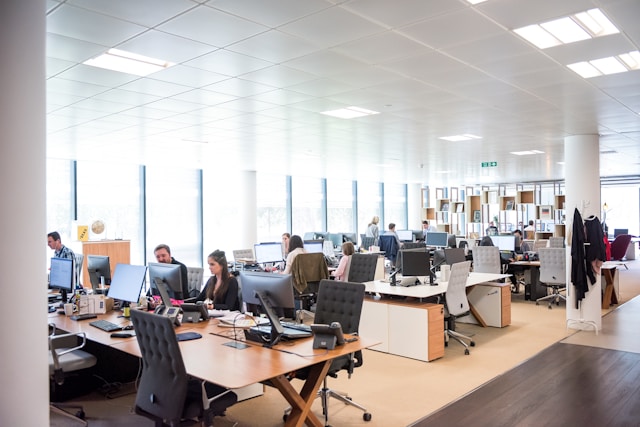
First Impressions: Why Your Office Environment Impacts Your Bottom Line?
When a potential client walks through your office door, they form an opinion about your business in just seven seconds. A clean, well-maintained office tells visitors that you pay attention to details and take pride in your work. A messy or worn-down space sends the opposite message, no matter how good your products or services are.
Your office environment also impacts your employees daily. Studies show that workers are more productive in clean, organized spaces. They take fewer sick days and feel more motivated to do their best work. Think of your office as a business investment that needs regular care to protect its value and support your growth.
The True Cost of a Neglected Office Space
Many business owners don’t realize how much a poorly maintained office actually costs them. Lost opportunities add up when potential clients choose competitors because your space didn’t look professional. You might never know how many deals you lost because someone walked into a dingy reception area or conference room with stained carpets.
Employee productivity suffers in unclean environments too. Poor air quality and accumulated dust trigger allergies and respiratory problems, leading to more sick days. Workers get distracted by mess and disorganization, which costs your business money every single day.
Then there’s the cost of replacing things too early. A carpet that should last ten years might need replacement after just five if neglected. That means you’re spending twice as much over time—money that could have gone toward growing your business instead.
High-Traffic Areas That Demand Regular Attention
Not every part of your office needs the same level of care. Some areas take much more wear and tear because everyone uses them constantly.
Your entryway and reception area are where first impressions happen. This space gets walked through dozens or hundreds of times each day. Dirt and debris get tracked in constantly, so this area needs daily attention and regular deep cleaning.
Conference rooms and meeting spaces are where you close deals and make important decisions. Clients and partners see these rooms, so stained chairs or dirty carpets make everyone uncomfortable. These spaces should always be spotless and ready for important meetings.
Break rooms and common areas affect employee satisfaction more than you might think. When these spaces are clean and well-maintained, workers feel valued. When they’re neglected, it sends a message that leadership doesn’t care about employee comfort.
Carpets and Flooring: The Foundation of Office Professionalism
Your office flooring covers more square footage than any other surface and is one of the first things people notice. Worn, stained, or dirty carpets immediately make your entire office look unprofessional, even if everything else is perfect.
Beyond appearances, your flooring affects air quality throughout your workspace. Carpets trap dust, allergens, and pollutants. In an office with many people coming and going, this buildup happens quickly and leads to employee health issues.
Many business owners think they need to replace carpets when they start looking bad. But professional maintenance costs much less than replacement and can extend carpet life significantly. Regular deep cleaning removes embedded dirt and restores appearance, often doubling or tripling how long your flooring lasts.
ROI of Regular Professional Maintenance
Let’s look at the numbers. Commercial carpet replacement typically costs $3 to $7 per square foot. For a 2,000 square foot office, that’s $6,000 to $14,000. Professional deep cleaning costs around $0.25 to $0.50 per square foot, or $500 to $1,000 for the same space.
If regular maintenance extends your carpet life from five years to ten years, you’ve just saved thousands of dollars while avoiding the business disruption that comes with replacement.
Creating a Sustainable Office Maintenance Schedule
The key to maintaining a professional office is consistency. Build maintenance into your regular business routine instead of waiting until things look terrible.
Daily tasks should include emptying trash, wiping surfaces, and spot-cleaning spills. Weekly tasks include vacuuming all carpeted areas, cleaning bathrooms, and dusting. Quarterly deep cleaning sessions tackle what daily and weekly efforts can’t reach, including professional carpet cleaning and window washing.
The biggest question is when to handle tasks yourself versus bringing in professionals. Simple daily cleaning can be done by staff or a basic cleaning service. But specialized tasks like carpet deep cleaning and floor refinishing require professional equipment and expertise. Trying to do these yourself often costs more in time and poor results than hiring experts.
Choosing the Right Service Providers for Your Business
Not all cleaning and maintenance companies are created equal. Start by asking other business owners for recommendations and checking online reviews for patterns rather than single complaints.
When talking to potential service providers, ask important questions: How long have they been in business? Are they insured? What training do their employees receive? Can they provide references? What products and methods do they use?
Consider building long-term partnerships rather than hiring one-time services. Companies that work with you regularly get to know your space and needs, often providing better service and more competitive pricing to valued clients.
Maintaining Professionalism While Managing Growth
As your business grows, your maintenance needs grow too. What worked for five employees won’t work when you expand to twenty-five. Plan ahead so your standards don’t slip during growth periods.
Keep your maintenance standards consistent across all locations. Your office environment reflects your business values. A well-maintained professional space shows clients and employees that you care about quality in everything you do. It’s not just about looking good—it’s about creating an environment where great work happens and business relationships thrive.