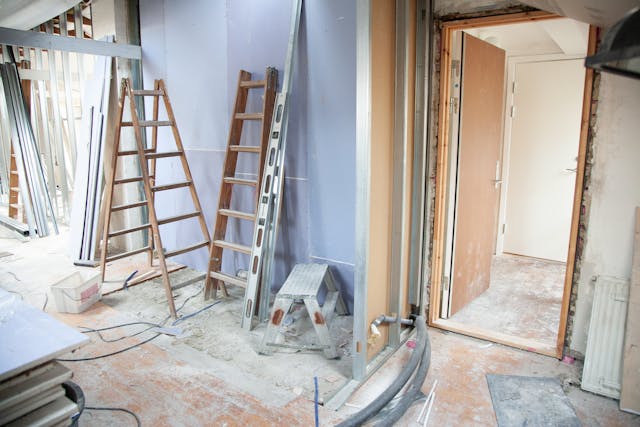
Modern occupiers need more than a “passive shelter” to a “critical support system.” Home standards and design needs are emerging from effects of environmental volatility, a shift in work-life boundaries, and a growing awareness of your space can impact mental health. Standard restoration, simply fixing what is broken—is no longer enough to protect the value of a property or the well-being of its occupants. We are now looking at The Regenerative Era, where the goal is to “future-proof” the human as much as the house.
1. Neuro-Aesthetic Sequencing: Designing for the Brain
You’re not just moving through spaces; your brain is constantly processing them. Yet most environments are subtly hostile—sharp corners, awkward corridors, and jarring thresholds spike stress without anyone realizing it. In 2026, neuro-aesthetic sequencing changes the game. It’s not about paint swatches—it’s about mapping how your space affects focus, creativity, and calm.
General Contractor Indianapolis experts replace sharp angles with bull-nosed edges, create sinuous circulation paths, and use arched transitions to guide movement naturally. Every dimension is measured against human neurology. Such strategies marks a shift from cosmetic renovation (making a place look “new”) to strategic neuro-architecture (making a place work for the human brain).
The payoff?
- Homes that support your life instead of working against it.
- Offices that boost productivity and tenant retention.
Well-curated spaces that work with the brain retain people and value. Radical restoration is about engineering cognitive comfort, not just visual appeal.
2. Forensic Biological Integrity: Beyond Visible Damage
Mold remediation alone? That’s 2010. In 2026, the standard for a “safe” building has shifted from a visual inspection to a molecular and data-driven one.
That helps in detecting hidden threats before they compromise health or value. Moisture pockets, cold bridges, VOC emissions, and sonic stress can quietly erode both human and financial capital.
Advanced tools—AI-driven thermal imaging, infrared scans, and digital twins—allow specialists to uncover problems invisibly. Bio-based acoustic panels, mineral plasters, and scent-integrated HVAC systems turn a home or office into a living sanctuary.
The difference is dramatic: occupants sleep better, think clearer, and feel safer. Investors secure resilient, high-performing properties. Homeowners gain more than aesthetics—they get a space that actively protects life and wealth. Radical restoration doesn’t just clean; it safeguards. It anticipates, prevents, and elevates every dimension of the space.
3. Living Material Integration: Spaces That Self-Heal
This is about autonomous maintenance. The modern technology has allowed experienced restorers to move past materials that simply “last long” to materials that “act alive.”
Repairing the same scratches, chips, and cracks over and over is a silent drain. In 2026, living materials—mycelium-infused flooring, protein-based coatings—change the game. Minor damage heals autonomously, cutting maintenance cycles and extending the life of every surface.
Historic homes benefit hugely: bio-adaptive coatings integrate with old timber and masonry without erasing authenticity. The building evolves naturally, aging gracefully rather than degrading visibly.
For investors, this is predictable, lower-risk performance. For homeowners, it’s a tactile, living connection to the space. Restoration isn’t about patching anymore—it’s about nurturing. Think of your property as a living ecosystem: the goal is not survival, it’s thriving. That’s radical, strategic expertise in action.
4. Circadian-Calibrated Infrastructure: Restoring Biological Rhythm
Humans have a natural timing rhythm, which is primarily regulated by the light entering the eyes; and cycles between sleepiness and alertness. Standard, static LED lighting often “confuses” this clock by providing the same harsh blue-spectrum light at 8:00 PM as it does at 8:00 AM. That’s where expertise in interior design come handy.
- Morning areas emit blue-rich light to energize
- Workspaces balance neutral daylight for focus
- Evening zones shift to amber or near-infrared to cue melatonin.
Hidden wiring and adaptive controls make this seamless and invisible.
The result? Occupants sleep with calm, work smarter, and feel healthier. Investors see higher productivity and lower turnover. Homeowners gain spaces that actively support life cycles. Radical restoration here is about embedding wellness into the very DNA of your building—not just making it look polished. It’s intelligent performance, not decoration.
5. Heritage Maximalism and “Future Heirlooms”
Minimalism is dead. In 2026, heritage maximalism is the standard: every surface, joinery, and finish communicates identity, skill, and strategy.
The Material Dialogue: High-Contrast Craftsmanship
This isn’t just “clutter”; it’s a highly technical mix of ancient textures and futuristic metals.
- Limewash & Venetian Plaster: These are high-performance, breathable, and carbon-sequestering materials that improve air quality; and good looks as well.
- Matte Zinc & Copper: They are good with antimicrobial properties while adding a sense of permanence and “weight” that modern plastics or veneers lack.
- Bespoke Joinery: Moving away from mass-produced furniture toward local craftsmanship. This creates a “story” for the property, which is a major driver of value in a luxury or professional market.
Radical restoration is deeply specialized, strategic, and identity-driven. Every intervention is an investment in both legacy and performance, turning routine repair into a cultural, financial, and experiential upgrade.
6. Adaptive Functionalism: The “Swing Space” Era
Life evolves fast—your spaces should too. Offices become wellness rooms. Guest bedrooms become studios. Kitchens restoration that embraces adaptive functionalism comes with hidden wiring, modular storage, and convertible layouts allow invisible transitions between uses.
Owners gain resilience. Investors gain lifecycle value and reduced downtime. Every square foot is intentional; every intervention anticipates change rather than reacts to it.
Intentional and up to date restoration isn’t about filling gaps; it’s specialist-led transformation. Spaces become smarter, healthier, and future-ready. It’s not just patching—it’s upgrading your life infrastructure, making every property a long-term asset for wellbeing, equity, and adaptability.
In essence, when you invest in radical, craft-oriented restoration, your home stops being a passive shelter and starts operating as a high-performance asset. In 2026, the old boundary between “home” and “health or productivity center” no longer exists—it has collapsed. But this transformation doesn’t happen by accident. It requires partnering with a restoration expert who understands how to integrate heritage, maximalism and adaptive functionalism with precision and restraint to create true brand premium. The result is profound. This isn’t lifestyle design. It’s strategic infrastructure for human longevity and value creation.